Leak Detection in Fort Lauderdale, FL
Leak detection finds where water is escaping before anyone opens a wall or cuts a slab. Call if the meter keeps moving, the bill jumped, or a stain appears and you cannot trace it.
Cannot find the leak?
Tell the dispatcher what you have already checked. Say whether the meter moves with every fixture off.
(754) 320-541224/7 emergency lineA meter that moves with everything off means a leak
Most hidden leaks announce themselves through numbers, not puddles. The water bill creeps up, or a utility letter says usage is far above normal. Your own meter settles the question in fifteen minutes.
Before you call, run the simple test below. It tells the dispatcher whether the loss is inside the house, between the meter and the house, or in a fixture.
The fifteen minute meter test
- Turn everything offClose every faucet, stop the dishwasher and washer, and pause irrigation. Make sure no one flushes a toilet.
- Read the meterOpen the meter box and look for the small leak indicator, often a triangle or star. Note the register digits as well.
- Wait fifteen minutesDo not use water. Check the indicator again and compare the digits.
- Close the house valveShut the main valve at the house and check once more. If the meter now stops, the leak is inside the house. If it still moves, the loss is on the line from the meter.
A dye tablet in each toilet tank can also expose a silent flapper leak. If the color shows in the bowl after twenty minutes without flushing, that toilet is losing water. A worn flapper is usually a small repair. See toilet repair for how it is diagnosed and fixed.
How leak detection is done
A technician narrows the search in stages. The aim is a marked spot on the floor or ground, so the repair opens one small area instead of a whole room.
| Method | Best for | Limit to know |
|---|---|---|
| Pressure test of an isolated line | Confirming which section of pipe loses pressure | Shows the section, not the exact spot |
| Acoustic listening and correlation | Pressurized lines under floors and yards | Road noise and loose soil can mask the sound |
| Thermal imaging | Hot water lines under tile or in walls | Needs a temperature difference to read |
| Moisture meter and probe | Walls, ceilings and subfloors | Finds wet material, which may sit away from the source |
| Drain camera | Sewer and drain leaks | Pressurized supply lines are not visible this way |
| Tracer gas | Hard cases where other methods disagree | Not offered by every contractor |
Equipment varies by contractor. Ask the dispatcher which tools the technician carries, and whether the visit includes marking the leak. Ask also if the same company will repair what it finds. Some contractors only locate leaks, and others do both.
If a previous plumber could not find the problem, say so. A second search usually starts by repeating the pressure test and then changing method, since one tool can miss what another finds.
Give your street address and say what the meter does with every fixture off.
Where leaks hide in Fort Lauderdale homes
Most local houses sit on a slab, so supply lines often run in the concrete or just beneath it. A pinhole there can drip for months. Slab leak repair has its own page because the fix differs from work in an open wall.
Irrigation is the next common source. Sprinkler zones sit on a separate line, and a cracked fitting under turf shows only as a wet patch, a soggy strip or a greener stripe of grass. The line between the meter and the house is another weak point, covered under water line repair and replacement.
Older homes add their own risks. Corroded copper develops pinholes. Gray polybutylene pipe from the late 1970s to the mid 1990s can crack at fittings. If leaks keep appearing in different rooms, a repipe may cost less than a string of repairs.
High bill? Check the city adjustment rules
The City of Fort Lauderdale has a high use billing adjustment that may re-rate part of a leak-driven water bill, subject to city approval. The rule applies to residential accounts when monthly usage runs above twice the 12-month average. You must apply within 60 days of the high bill and attach a plumber invoice that shows the repair, or a hardware receipt if you fixed it yourself.
The credit covers a maximum of two months, and the extra usage is re-rated at the lowest tier. Ask the utility at (954) 828-5150 whether sewer charges are included. Other cities set their own rules, so check with your own provider. Ask the plumber to write the leak location and repair date on the invoice.
Repair after detection: spot fix, reroute or replace
Finding the leak is the first half. The second half is choosing the repair. The right choice depends on pipe age, how many leaks the line has had, and what sits above it.
- Spot repair suits a single failure in an otherwise healthy pipe.
- Reroute moves a failing line out of the slab or wall, often through the attic.
- Replacement or repipe fits when leaks repeat or the material is known to fail.
- Trenchless methods can replace an underground line with less digging, where access and soil allow.
What changes the price of leak detection
- Area to search
- One bathroom is a smaller job than an entire lot or a four-unit building.
- Access
- Bare slab, tile, carpet and landscaping each change how the technician works.
- Property type
- A single-family home, a rental with several units and a shopping plaza differ in plumbing layout.
- Repair included or not
- A locate-only visit and a locate-and-repair visit are priced differently.
- Time of call
- After-hours calls usually cost more than a scheduled visit.
No price is listed here because it depends on the job. Ask the contractor for the price of the locate step before it begins. Insurance policies differ, and many cover resulting damage but not the pipe itself, so ask your insurer early.
Signs you may need a leak finder
Hidden leaks rarely announce themselves. These are the symptoms that callers describe most often.
- The meter keeps turning after every tap, appliance and irrigation zone is off.
- The water bill creeps up month after month with no change in habits.
- A wet spot appears in the yard or near the meter box.
- You hear water running when the house is quiet.
- A floor feels warm, soft or damp in one spot.
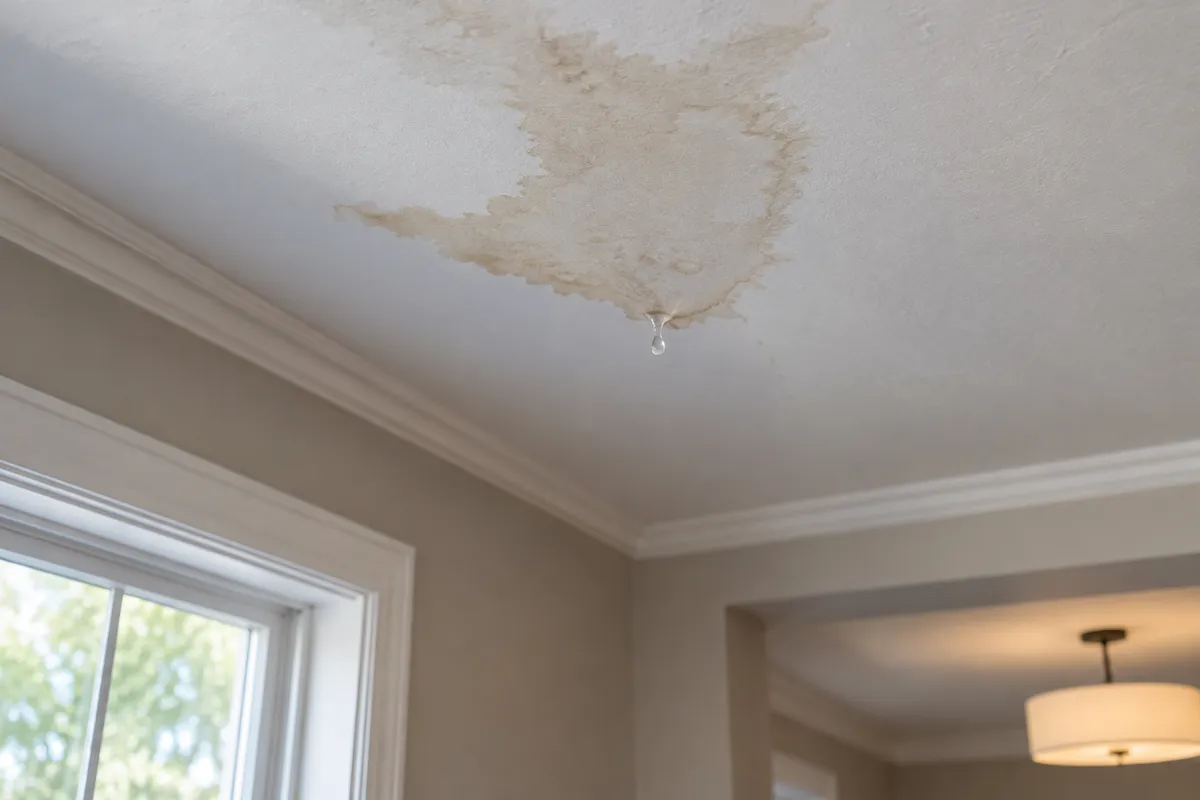
- A stain spreads on a ceiling below a bathroom.
Confirm it with the meter first
Turn off everything that uses water. Read the meter, wait twenty minutes, and read it again. A change means water is leaving somewhere. Then close the house shutoff valve and check once more. If the meter still moves, the leak is between the meter and the house. If it stops, the leak is inside.
Methods used to pinpoint a leak
Contractors use different methods depending on where the pipe runs. Listening devices pick up the sound of water escaping under pressure. Thermal imaging shows warm patches from hot line leaks. Camera inspection works inside drain lines, and pressure testing isolates which section of pipe loses water. Tracer gas is another method for pipes that are hard to hear.
Which tools arrive depends on the contractor you are connected with. Ask what method will be used and whether the spot will be marked on the surface, so you know what you are paying for.
Before the technician arrives
Do these while you wait
- Write down the meter reading and the time you took it.
- Close the main valve if water is escaping inside the house.
- Keep irrigation off, and move cars from the area around the meter box.
- Collect two or three recent water bills so the jump is easy to show.
- Note any warm spots, damp baseboards, musty smells or the sound of running water.
Questions people ask before they call
Turn off every fixture and read your meter. If the leak indicator spins or the digits move over fifteen minutes, water is escaping. A bill that rises with no change in habits is another sign.
Good detection narrows the search to a small area and marks it on the surface. The exact accuracy depends on pipe depth, material and noise, so ask the technician what to expect on your property.
Say so on the call. A second visit should repeat the pressure test and use a different method, such as thermal imaging or acoustic listening, before anyone cuts into a surface.
That depends on the contractor. Ask the dispatcher whether the same company repairs what it finds, and get the locate step priced separately from the repair.
Yes. Tell the dispatcher the number of units and where the meter sits. Rental properties may need owner or manager approval before anyone enters a unit.
Policies differ. Many cover sudden damage but exclude the pipe and long-term seepage. Ask your insurer before the visit and keep the plumber's written findings.
Cost depends on how large the property is, where the pipes run and how hard the leak is to hear. Ask for the diagnostic price before the visit and ask whether it is credited toward a repair.
That is the goal of detection. Ask the contractor to mark the surface above the leak so you or another trade can find the spot later.
Almost always. Check that no toilet, ice maker or irrigation zone is running, then close the house valve and watch the meter again to see which side the leak is on.
It is harder than metal because plastic carries sound poorly. Other methods, such as pressure testing and tracer gas, can help. Ask the contractor what applies to your line.
Some contractors will find the leak and stop there. Ask the dispatcher whether detection is offered on its own and what the report includes.
Still guessing where the water goes?
Call with your meter reading or the location of the stain. A dispatcher will explain what a detection visit involves.