Repiping in Fort Lauderdale, FL
Repiping swaps the supply pipes inside your home for new ones. It makes sense when leaks keep returning in different rooms, pressure fades, or the pipe material is known to fail.
Leaks keep coming back?
List the repairs you have had and the age of the house. The dispatcher will explain repipe options.
(754) 320-541224/7 emergency lineWhy homes get repiped
One leak is a repair. Three leaks in a year is a pattern. Repiping replaces the whole supply system, so the failures stop moving from room to room. Water pressure often improves too, because corroded pipe restricts flow.
Repiping covers the pipes that bring water to fixtures. Drain pipes are a different system, covered on the sewer line replacement and drain cleaning pages. The line from the meter to the house is covered under water line repair and replacement.
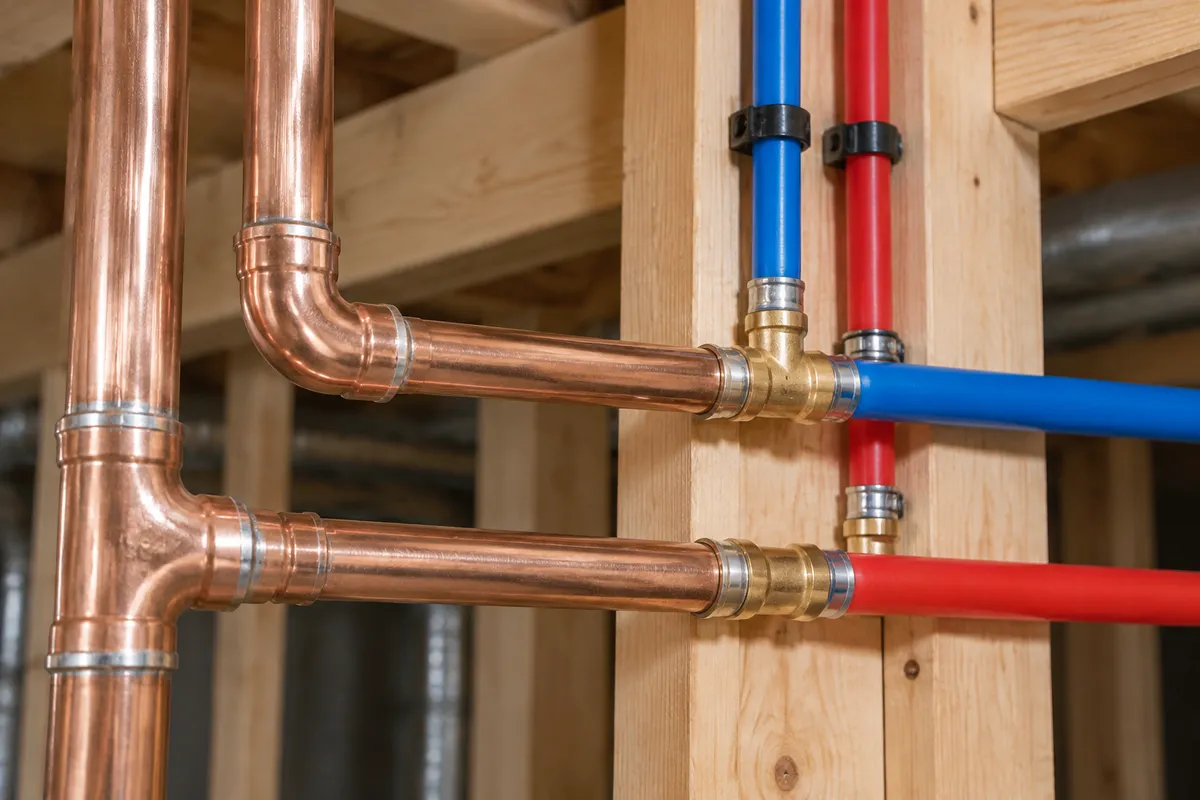
Signs a repipe is worth pricing
- Leaks in more than one place, or the same pipe leaking again after a repair.
- Pinhole leaks in copper, often with green or blue stains on pipes.
- Gray plastic supply pipe, which may be polybutylene.
- Low pressure that persists after the regulator and fixtures are checked.
- Rusty or discolored water when the tap first opens.
- Galvanized steel pipe that has narrowed inside.
Pipe materials you may find in a Fort Lauderdale home
| Material | Common era | Known problem | Typical advice |
|---|---|---|---|
| Galvanized steel | Before the 1960s | Rust narrows the pipe and cuts pressure | Replace when leaks or low flow appear |
| Copper | 1960s to today | Pinholes from the inside, often from water chemistry | Repair once, replace if repeated |
| Polybutylene (gray) | Late 1970s to mid 1990s | Brittle at fittings, can fail without warning | Plan replacement, even if it has not leaked |
| CPVC | 1980s to today | Turns brittle with age and heat | Monitor, replace failing runs |
| PEX | Newer homes and repipes | Few failures, damaged by sunlight and sharp bends | Common replacement choice |
The city treats water at plants that use different methods, so mineral content differs by area. Ask the contractor what they see inside your cut pipe. A plumber who shows you the corrosion can explain more than a sales pitch can.
Describe your pipe material, the age of the house and the leaks you have had.
Cracked pipe, failing plastic and old copper
Most repipe questions start with one broken pipe. A single crack is a repair. A pattern of cracks is something else.
Cracking plastic supply pipe
CPVC can turn brittle with age and heat. Owners often ask to replace it before it cracks. If the pipe is in an attic or near the water heater, check for fine cracks at elbows and tees.
Hot lines only
Some owners replace only the hot water lines because those fail first. That is a partial repipe. It costs less now, and it leaves the cold side as is.
Lining as an alternative
Pipe lining coats the inside of an existing pipe. It is used more on drain lines than on supply lines. Ask whether it applies to your pipe and what the lining is rated for.
How a repipe works on a slab home
Most local houses are on slabs, so lines are not usually pulled out of the concrete. Instead, new pipe runs through the attic and down interior walls to each fixture, and the old lines are capped or abandoned in place. This is often called a replumb. It keeps new pipe out of the slab and makes later repairs easier.
The work needs access holes in drywall at fixtures and sometimes at switch points. A good contractor sets those locations before starting and tells you who patches and paints.
- Inspect and planThe plumber maps fixtures, checks the attic and pressure, and explains the route.
- Pull the permitRepiping needs a plumbing permit. The contractor files it with the city and schedules inspections.
- Run the new linesNew pipe goes in, with the water shut off for part of the day. Ask when you will have water again.
- Test and inspectThe system is pressure tested and inspected before walls are closed.
- Patch and finishDrywall, paint and any cabinetry work may be handled by you or by a separate trade.
Partial or whole house?
A partial repipe replaces one branch, such as the bathroom lines or the hot side only. It costs less now. It can also leave older pipe behind that fails next. If the house has polybutylene or a galvanized main run, a whole-house repipe usually saves repeat visits.
What changes the cost of a repipe
- Number of fixtures
- More bathrooms, kitchens and outdoor spigots mean more pipe.
- Home size and layout
- A one-story ranch is quicker than a two-story home with tight attic access.
- Pipe material
- PEX, copper and CPVC differ in cost and labor.
- Drywall patching
- Scope depends on how many access holes are needed and who finishes them.
- Permits and inspection
- These are normally part of the job and add scheduling time.
Get two written scopes if you can, and compare the number of fixtures, the pipe type and whether patching is included. Insurance seldom pays to replace pipe that has not yet failed, though policies differ.
If the main complaint is a single hidden leak, begin with leak detection. A repipe is the right call when detection keeps finding the next failure.
Questions people ask before they call
It is a gray, flexible plastic pipe, often with markings such as PB2110 on the side. Look near the water heater, under sinks or at the main entry. Ask a plumber to confirm.
It depends on the size of the home and the method, so ask for a schedule in writing. Water is usually shut off for part of each day, not the whole job.
Most people stay in the house. Expect noise, dust and drywall access holes. Ask the contractor how they protect floors and when the water returns.
It can, if corroded or narrowed pipe is the cause. Have the plumber check the regulator and the water line first, since those are cheaper fixes.
Plumbing permits are required for major work such as rerouting lines, and the licensed contractor handles them. Confirm the rule with your city if you live in another Broward city.
Both are accepted when installed to code. PEX costs less and resists some corrosion, while copper is long-lived in the right water. Ask the contractor why they recommend one for your house.
If the pipe is old and brittle, a planned replacement can cost less than a failure. A plumber can look at the pipe and its fittings.
Yes, as a partial repipe. Ask the contractor what each option leaves behind and what it costs.
Cost depends on the size of the home, the material and access. Ask for a written estimate that lists the walls that will be opened.
If one slab leak was found, others may follow. Compare a spot repair with a reroute through the attic.
Tired of patching pipes?
Call and describe the leaks you have had. A dispatcher will explain what a repipe involves.